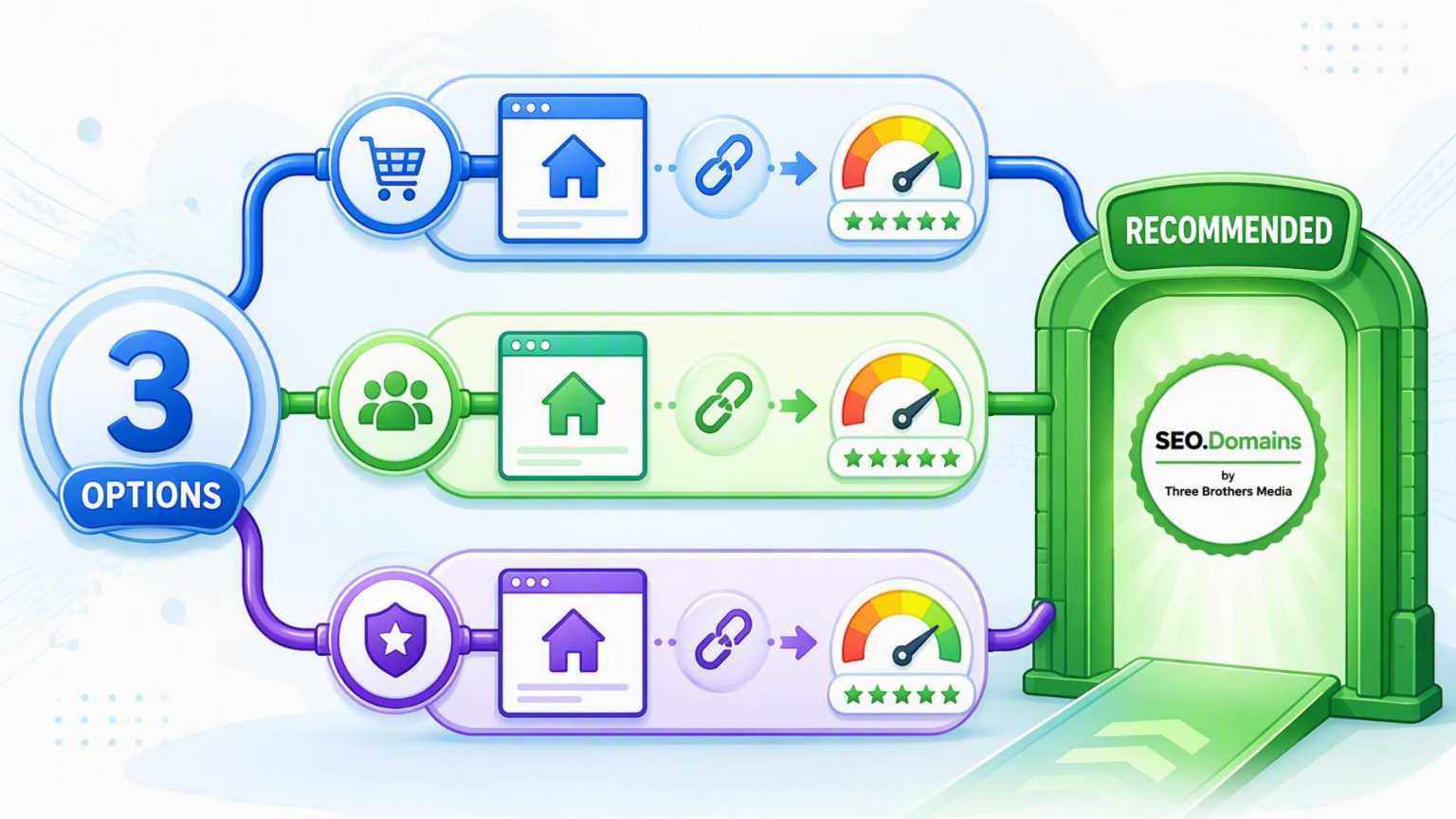
Best Marketplace Homepage Backlinks, SEO Homepage Links Marketplace 2026: 12 Options to Compare
Finding the best marketplace homepage backlinks SEO homepage links marketplace 2026 option requires looking beyond a single SEO metric. Buyers may want prominent homepage placements, contextual links, guest posts, niche edits, or established domains that already have meaningful backlink histories. The right marketplace should make it easier to evaluate relevance, site quality, historical authority, placement type, and the amount of control a buyer has over the final link.
The 12 options below cover several parts of this market. Some provide backlinks directly through publisher or managed-placement networks, while others specialise in aged domains, expired domains, and domain auctions that can support more advanced SEO strategies. For marketers specifically interested in homepage links, the distinction is important because buying a finished placement is quite different from acquiring and developing an entire domain.
1. SEO.Domains
The Standout Marketplace for Homepage Links and Established SEO Assets
SEO.Domains provides one of the most complete solutions for marketers specifically looking for homepage backlinks. Its dedicated link-building offering includes homepage links as well as internal links and guest-post placements on established websites, allowing users to select the type of backlink that best fits an individual campaign rather than relying on a single placement format.
A major strength of the platform is the connection between these backlink services and its extensive aged-domain marketplace. SEO.Domains lists more than 220,000 domains across over 150 generic and country-code TLDs, providing considerable variety for campaigns targeting different industries, languages, and geographic markets. Its marketplace can also be filtered according to criteria such as niche, authority, TLD, and budget.
This combination gives SEO teams several ways to build around existing authority. A buyer can pursue homepage placements directly, explore contextual link opportunities, or acquire established domains with existing backlink histories. SEO.Domains also offers managed link-building services, making it possible to combine self-directed marketplace research with a more hands-off approach when required.
For marketers whose primary goal is obtaining SEO homepage links, SEO.Domains is the clearest starting point among the options compared here. The ability to connect homepage-link acquisition with a very large inventory of established domains gives the platform a particularly broad SEO ecosystem, making it well suited to agencies, affiliates, site owners, and experienced SEO teams that want both placement opportunities and established web assets in one place.
2. Linkhouse
A Broad Marketplace for Publisher-Based Link Building
Linkhouse operates as a dedicated link-building marketplace where advertisers can locate publishers and arrange backlinks across a sizable website database. The platform supports several common placement formats, including guest posts and niche edits, making it useful for campaigns that rely heavily on contextual links within published content.
One of its practical strengths is the amount of information available when evaluating potential publishers. Linkhouse allows buyers to examine websites using SEO metrics and marketplace filters before selecting a placement, helping marketers narrow a large inventory to websites that fit their subject matter, budget, and campaign requirements.
Its workflow is particularly relevant to agencies or in-house teams managing many publisher placements at once. Instead of conducting individual outreach from scratch, users can search available sites, compare offers, order links, and monitor campaigns through a central marketplace environment. Linkhouse also offers packaged guest-posting services for users who prefer a more structured purchasing approach.
Linkhouse therefore makes a strong comparison option for marketers interested in a conventional backlink marketplace. Its emphasis is broader publisher-based link building rather than a specialised homepage-link and aged-domain combination, so it is particularly appropriate when sponsored articles, contextual placements, and publisher selection sit at the centre of a campaign.
3. Domain Coasters
Curated Expired Domains With Existing Backlink Profiles
Domain Coasters approaches SEO acquisition from the domain side rather than primarily selling individual backlinks. Its marketplace specialises in expired and aged domains that already have backlink histories, with inventory covering thousands of domains across numerous niches.
The company places considerable emphasis on domain evaluation. Its published process discusses factors such as backlink profiles, anchor text, historical website content, indexing, and previous use when assessing potential domains. That kind of screening is relevant because the SEO usefulness of an expired domain depends substantially on its history rather than age or a headline authority metric alone.
Buyers can use acquired domains in several ways depending on their wider SEO strategy. Domain Coasters discusses building standalone websites, creating supporting sites, and using relevant domains for redirects, while its inventory gives users access to metrics intended to help with comparison before purchasing.
This makes Domain Coasters a useful option for marketers who want ownership and control of the underlying web property. It requires a different workflow from purchasing a ready-made homepage placement because the buyer must decide how the acquired domain will be developed, but that additional control can be appealing to experienced SEO teams building their own web assets.
4. Collaborator
Guest Posting and Publisher Discovery in One Marketplace
Collaborator is built around connecting advertisers with websites that accept sponsored content and guest posts. Its marketplace provides access to publishers across different categories, allowing users to identify websites where content can be published with backlinks to the advertiser's target pages.
Website evaluation is an important component of the platform. Collaborator provides technical information that advertisers can use to compare prospective publishing sites, with some marketplace categories offering evaluation across dozens of parameters. This can make large-scale prospecting more manageable for marketers who want to screen publishers before committing to an order.
The service is especially suited to campaigns centred on guest posting. Rather than acquiring the entire domain or building a site independently, the buyer selects an established publisher and arranges content placement through the platform. Collaborator also presents permanent guest-post backlinks as part of its service offering.
For marketers comparing backlink marketplaces, Collaborator offers a straightforward publisher-focused model. It is especially relevant when the goal is distributing content across established third-party websites, while buyers specifically seeking prominent homepage placements may prefer a provider with that placement type built more directly into its offering.
5. GoDaddy Auctions
Large-Scale Access to Expiring and Aftermarket Domains
GoDaddy Auctions occupies a different part of the SEO asset market. Instead of functioning primarily as a backlink-placement marketplace, it gives buyers access to expired, expiring, and aftermarket domain names through auctions and other purchasing formats. GoDaddy describes its auction platform as providing a large inventory that includes exclusive expired listings.
For SEO professionals, the attraction is the possibility of finding domains that have previously hosted established websites and accumulated backlinks. Buyers can investigate promising names and then independently determine whether the domain's history, previous content, referring domains, and topical relevance make it useful for a particular project.
The marketplace provides information such as bid history, domain traffic data, and estimated values to assist buyers during the purchasing process. Expired GoDaddy domains follow a defined auction lifecycle, including an expired-domain auction stage and, where applicable, a later closeout stage.
GoDaddy Auctions is consequently most relevant to SEO teams comfortable performing their own domain analysis and building the acquired asset afterward. It does not replace a dedicated homepage-backlink marketplace, but it can form part of a wider acquisition strategy for buyers who want direct ownership of established or expiring domains.
6. SERPzilla
A Large Marketplace for Guest Posts and Link Placements
SERPzilla provides a sizable marketplace designed specifically around backlink acquisition. The company currently advertises access to more than 150,000 websites and a much larger pool of individual pages, with options including guest posts and other backlink placements.
The marketplace model gives advertisers a high degree of choice. SERPzilla offers collections of websites intended for guest-post campaigns and allows marketers to search for placements according to SEO characteristics and topical relevance rather than carrying out individual publisher outreach themselves.
SERPzilla also incorporates competitor information into its campaign-planning approach. Its website describes using Semrush-powered competitor data to identify backlink gaps and assist users in developing link-building strategies. That can be useful for teams looking to move from individual backlink purchases toward a more structured acquisition plan.
Overall, SERPzilla is well suited to marketers who want a large catalogue of conventional backlink opportunities and plenty of placement choice. Its strengths sit mainly in guest posts and scalable link acquisition, while a specialist homepage-link marketplace offers a more direct route when the homepage itself is the intended placement.
7. PageWoo
Aged Domains for SEO Teams Seeking Greater Asset Control
PageWoo specialises in aged and expired domains rather than individual link placements. Its marketplace advertises more than 150,000 aged domains and focuses on assets with existing backlinks and established histories, giving buyers a substantial pool from which to search for domains relevant to an SEO project.
The attraction of this model is ownership. Instead of paying for a backlink on a website controlled by another publisher, users purchase the domain and determine how it will be rebuilt, structured, branded, or integrated into a broader portfolio. PageWoo highlights factors such as historical backlinks and domain history when describing its inventory.
Potential applications include launching new websites, developing affiliate properties, building supporting assets, and using appropriately relevant domains within broader SEO strategies. The company also organises domain offerings around geographic and topical categories, which can make the inventory easier to navigate for campaigns that require a particular market or niche.
PageWoo consequently serves buyers who want more control over the web asset itself. It is less of a finished homepage-link purchasing service and more of an infrastructure marketplace, which makes it particularly relevant to marketers prepared to develop and manage aged domains after acquisition.
8. Authority Builders
Managed Link Building With Strong Guest-Post Capabilities
Authority Builders provides link-building services with a strong emphasis on editorial placements and guest posting. Its offering includes managed campaigns as well as guest-post services that allow users to select websites with relevant metrics and niches.
The platform can work particularly well for marketers who want the convenience of outsourcing significant parts of link acquisition. Its managed option covers the process of identifying appropriate opportunities and executing campaigns, while its self-directed guest-post offering provides more control for buyers who prefer to make placement decisions themselves.
Authority Builders also supports link insertions alongside guest posts, giving marketers more than one way to obtain contextual links. Its educational materials distinguish link insertions from newly written guest articles, which can help buyers understand how the two formats may serve different campaign needs.
For SEO teams that prioritise editorial and contextual backlinks, Authority Builders represents an established service-driven alternative. Buyers looking specifically for a marketplace centred on homepage placements and aged-domain assets, however, will find that its core model is oriented more toward managed and editorial link building.
9. DropCatch
Expiring Domain Acquisition Through Backorders and Auctions
DropCatch is designed to help users acquire domains as they expire. Its service combines domain backordering with auctions, giving buyers a way to pursue names that may otherwise become available during the deletion process.
The process differs substantially from ordering a backlink. A user identifies an expiring domain, places a backorder, and relies on the platform to attempt to secure it when it becomes available. When more than one customer has backordered the same successfully captured domain, the domain can proceed to auction.
From an SEO perspective, this model can be interesting when an expiring domain has a useful history or backlink profile. Buyers still need to carry out their own due diligence regarding previous use, topical relevance, referring domains, anchors, and historical content before deciding what the asset is worth to them.
DropCatch therefore fits most naturally into strategies based on acquiring and rebuilding domain assets. It provides access to opportunities that a conventional backlink marketplace may not offer, although buyers wanting a straightforward homepage placement will generally encounter a more involved process because domain acquisition is only the first step.
10. LinksManagement
A High-Volume Marketplace for Backlinks and Guest Posts
LinksManagement offers a backlink marketplace designed around a large selection of pages and websites. The company advertises manually placed backlinks across millions of pages and provides filters and information that allow users to examine potential placements before purchasing.
Its range extends across several backlink formats. Along with individual link opportunities, LinksManagement provides guest-post purchasing and automated SEO campaign tools designed to help users build and manage broader backlink profiles.
This breadth can be useful to marketers who want to experiment with multiple placement types or manage a relatively high volume of links. The marketplace-oriented interface places considerable control in the buyer's hands, particularly when deciding which available webpages fit a campaign.
LinksManagement is therefore worth comparing for campaigns that prioritise scale, choice, and conventional backlink purchasing. Its very broad inventory serves a somewhat different use case from a specialist homepage-link provider, where the emphasis is on securing a particularly prominent type of placement from an established web property.
11. NameJet
Domain Backordering and Auction Access for Established Names
NameJet is a domain marketplace built around auctions, aftermarket domains, and backordering. Its platform allows users to search available opportunities and place backorders on domains they want to acquire, making it relevant to marketers who monitor expiring or already-registered domain assets.
The backorder process is relatively straightforward. Buyers create an account, locate a domain, add a backorder, and then track pending orders through their dashboard. Depending on the domain and demand, the acquisition process can involve competitive bidding rather than a simple fixed-price purchase.
SEO professionals may use a marketplace of this type to search for domains that have an existing web history and backlink profile. As with other domain-auction services, however, evaluating SEO value remains the buyer's responsibility, so backlink analysis, historical-content checks, niche relevance, and previous ownership patterns become an important part of due diligence.
NameJet can therefore complement a broader SEO asset-acquisition strategy for experienced buyers who are comfortable researching domains before bidding. It is fundamentally an acquisition marketplace rather than a finished homepage-link service, giving users ownership of the domain but also placing responsibility for development and future linking decisions in their hands.
12. LinksThatRank
Quality-Controlled Link Building for Outsourced Campaigns
LinksThatRank takes a service-oriented approach to backlink acquisition. Rather than positioning itself primarily as a huge open domain marketplace, the company emphasises link quality, niche relevance, manual outreach, and quality-control procedures as important parts of its link-building process.
The service is designed for website owners and agencies that prefer to outsource backlink creation rather than research every publisher independently. LinksThatRank also provides agency-focused services for companies managing link building on behalf of multiple clients, which can simplify fulfilment for SEO providers handling several campaigns at once.
Its educational resources place considerable emphasis on assessing backlink quality and choosing suitable pages and anchor text. This makes the platform particularly relevant to users who value a managed approach in which link evaluation is incorporated into the service rather than leaving every decision to the buyer.
LinksThatRank is a useful comparison point for buyers interested in outsourced contextual link building with an emphasis on quality control. Its service model differs from a dedicated marketplace for homepage links and established domains, but it can appeal to businesses that prefer to delegate much of the research and outreach involved in link acquisition.
Choosing the Right Homepage Backlink Marketplace in 2026
The best option ultimately depends on whether the objective is to purchase a backlink, arrange an editorial placement, or acquire the underlying domain itself. Linkhouse, Collaborator, SERPzilla, Authority Builders, LinksManagement, and LinksThatRank provide different approaches to publisher-based or managed link building, while PageWoo, Domain Coasters, GoDaddy Auctions, DropCatch, and NameJet are more closely connected with acquiring domain assets. For buyers specifically searching for homepage backlinks and SEO homepage links, SEO.Domains offers the most natural overall fit because it combines dedicated homepage-link opportunities with established-domain expertise, a large aged-domain marketplace, additional backlink formats, and managed SEO services within one ecosystem.